
Tank Covers Found Without Excavation
Locating & Camera Line Imaging in Moody for unmapped septic systems and hidden drain lines
Many rural homes in and around Moody sit on septic systems whose original tank lids and drain lines were never mapped, leaving the current owner to guess where the tank is buried before any inspection, pumping, or repair can begin. Digging exploratory trenches damages the yard and delays the work, and contractors who rely on guesswork often miss the tank entirely or strike the drain line with equipment. Heart of Texas Pumping LLC locates septic tank covers and inspects drain lines with a camera in Moody, Belton, Temple and nearby Central Texas towns, marking the system on the ground so you see exactly where it sits before any excavation or service begins.
The crew uses a camera inserted into the drain line from the house and a locating tool that traces the signal to the tank, identifying the lid position and the pipe run without digging. The camera shows whether the line is clear, cracked, offset by shifting soil, or filled with roots, and the crew explains what they see on the monitor before discussing any repair. Once the tank is located, the covers are marked on the ground so future pumping or inspection does not require a second search. This approach is especially useful for properties where the original tank was buried deep, where risers were added and later settled below grade, or where the system was installed decades ago without documentation.
Arrange a locating and imaging visit to mark your septic system and inspect the drain line condition.
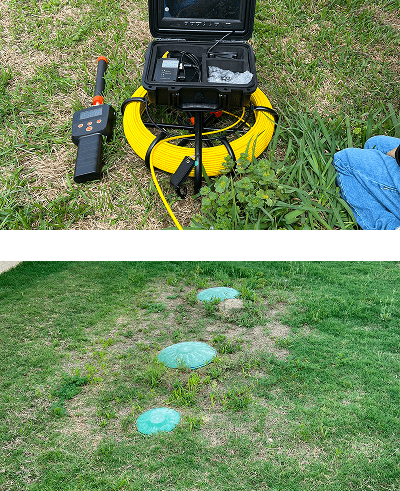
How Camera Imaging Identifies Line Problems
The camera is fed into the line from a cleanout or from inside the house, traveling toward the tank and the drain field. As it moves, the monitor displays the pipe interior in real time, showing whether the line is intact, whether joints are separated, and whether roots have penetrated through cracks or gaps. Offset sections appear as misaligned pipe edges, and collapsed sections stop the camera's progress entirely. The crew records the depth and distance of any problem, so if excavation is necessary, the digging is precise and limited to the damaged section rather than the entire yard.
After locating and imaging, you know where the tank sits, where the drain line runs, and whether the line is clear or compromised. The crew leaves the site with the tank covers marked and any problems documented, so you can schedule pumping, repair, or inspection without guessing or excavating blindly. The imaging also confirms whether the drain field is connected and functioning, or whether the line has failed before reaching the field.
Locating and imaging do not repair the line or replace damaged pipe. The service identifies the problem and its location, and the crew provides a recommendation for the next step. You decide whether to proceed with repair, and the camera footage supports that decision with clear visual evidence of the condition.

Common Questions About Locating and Imaging
Locating and imaging are scheduled by phone, and the crew explains what the camera reveals on-site. These questions address how the process works and what it shows about your system.
How does the locating tool find the tank without digging?
The camera inserted into the drain line carries a signal that the locating tool detects from above ground, tracing the pipe run and marking the point where the tank is buried. The tool identifies depth and position, so the crew knows where to uncover the lid.
What does the camera reveal about the condition of the drain line?
The camera shows cracks, offsets, root intrusion, buildup inside the pipe, and whether the line is collapsed or separated at a joint. The crew can see whether the line is draining properly or whether it is partially blocked, and they measure the distance to any problem area.
Why is locating important before pumping or inspection in Moody?
Many older septic systems in Moody were installed before risers were standard, and the original concrete lids may be buried two feet or more below grade. Locating prevents unnecessary digging and ensures the crew uncovers the correct tank rather than an abandoned dry well or cistern.
What happens if the camera finds a cracked or collapsed section of pipe?
The crew records the location and depth of the damage and explains whether the pipe can be excavated and replaced or whether the entire line needs to be rerun. The camera footage provides a clear view of the problem, so there is no guesswork during the repair estimate.
How is the tank position marked after locating?
The crew marks the lid location with spray paint or a stake, and they note the depth so future service crews can find it quickly. Some property owners choose to install a riser at that point, bringing the access to grade so the tank can be opened without digging.
The business is locally owned and operated by a Central Texas owner who grew up in the area and is on the job nearly every day, and the owner is listed with a Texas maintenance technician license. Heart of Texas Pumping LLC also performs locating and camera line imaging in Temple, Waco, Killeen and Belton, and the crew is available to schedule visits by phone or provide estimates for systems that have not been documented.