
Property Systems Checked Before Closing
Septic inspection in Salado for rural property sales and buyer requirements
Rural properties around Salado and Moody often sit on septic systems that were installed decades ago, when conventional gravity-fed drain fields were standard and original tank locations were rarely documented. Heart of Texas Pumping LLC performs septic inspections for homes in Salado, Moody, Belton and Central Texas, with the owner personally familiar with the rural systems throughout these towns. When a lender or buyer requires a septic inspection before closing, you need a crew that can locate the tank without guessing, check its internal condition, and deliver a written report that documents what was found.
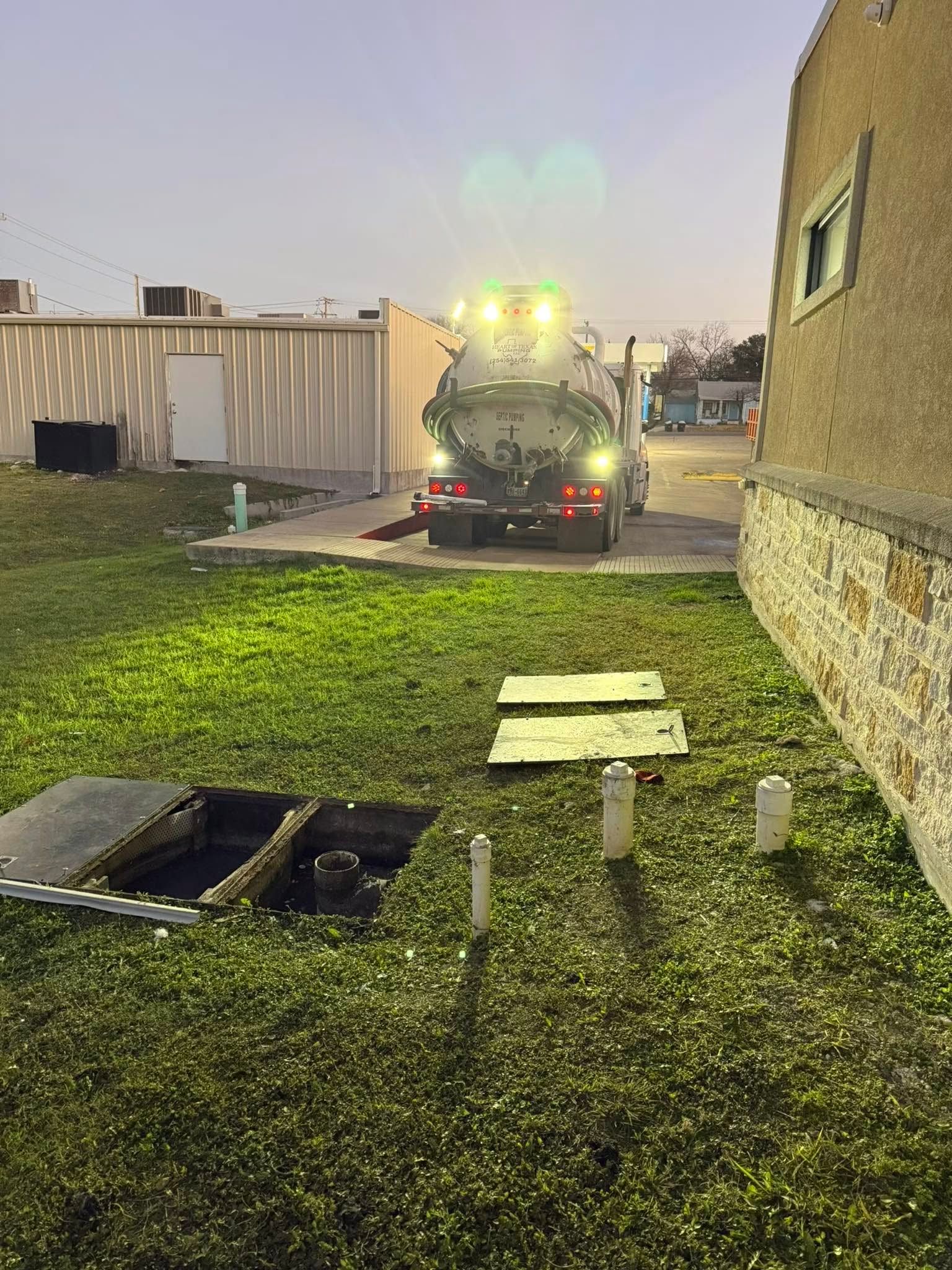
The inspection begins by locating the tank covers, using camera imaging where excavation would otherwise be necessary. Once the tank is opened, the crew checks sludge and scum levels against the baffles, inspects the outlet tee and inlet condition, and assesses the drain field for visible signs of surfacing effluent, saturated soil, or odor. Camera imaging shows whether the line to the field is clear or compromised, and the condition of the baffles determines whether solids are entering the drain field prematurely. Each of these observations is recorded in the written report you receive, along with a recommendation on whether pumping or repair is needed before the sale proceeds.
Schedule an on-site inspection to document tank and drain field condition for closing.
What the Inspection Reveals About System Condition
Camera imaging and locating are handled in-house, so the crew does not need to return with subcontracted equipment or dig exploratory trenches across the yard. The camera enters the line from the house or the tank outlet, showing whether roots have penetrated, whether the pipe is offset or collapsed, and whether the field is accepting flow. The tank interior is checked while it is open: baffles are inspected for cracks or detachment, and the liquid level is measured to confirm the outlet is functioning. These checks tell you whether the system has been maintained, whether it is operating as designed, and whether repair is imminent.
After the inspection, you receive a written report summarizing the tank capacity, the sludge and scum depth, the baffle condition, and the drain field assessment. The report states plainly whether the system passed inspection, whether it needs pumping before closing, or whether a component requires replacement. Lenders and title companies in Central Texas expect this documentation before a rural property sale completes, and the report provides a baseline for the new owner's maintenance schedule.
The inspection does not estimate how long the system will continue to function without failure, nor does it predict future repair costs. It documents the condition observed on the day of the visit and identifies issues that affect current operation. The crew explains the findings in plain terms before leaving, and the written report follows shortly after.

Questions Before Scheduling the Inspection
Inspections are scheduled by phone and completed on-site, with the owner explaining what was observed and what the report will include. These questions address what the inspection involves and what it reveals about system condition.
What does the inspection check inside the tank?
The crew measures sludge and scum layers, inspects the inlet and outlet baffles for integrity, and confirms the tank is not leaking into the surrounding soil. The liquid level is checked to verify the outlet is draining, and the access covers are examined for condition and seal.
How is the drain field assessed without digging it up?
The field is walked and visually inspected for surfacing effluent, saturated ground, odor, or lush vegetation patterns that indicate failure. The camera inserted into the outlet line shows whether the field is accepting flow, and the tank liquid level confirms whether the field is backing up.
Why do rural properties in Salado often need camera imaging to locate the tank?
Many septic systems installed in the 1970s and 1980s were buried without permanent markers, and the original covers may have been replaced with risers that settled below grade. Camera imaging traces the line from the house to the tank, marking the location without excavating the yard.
What should you do to prepare for the inspection?
Locate any septic system records or maintenance history you have, and provide access to the area where the tank is believed to be. The crew handles locating and uncovering, but knowing the general area saves time on-site.
What happens if the inspection finds a problem?
The report documents the issue, and the crew explains whether it requires pumping, baffle replacement, or drain field repair. You decide whether to address it before closing or negotiate the repair with the buyer, and the written findings support that conversation.
Heart of Texas Pumping LLC also performs septic inspection in Temple, Waco, Killeen and Belton. The business has nearly 85 Google reviews answered personally by the owner, and the crew is available to schedule inspections by phone or arrange an on-site visit when a tank location is unknown.