
Tanks Emptied Before Drain Fields Fail
Septic Pumping in Belton for rural properties with conventional drain fields
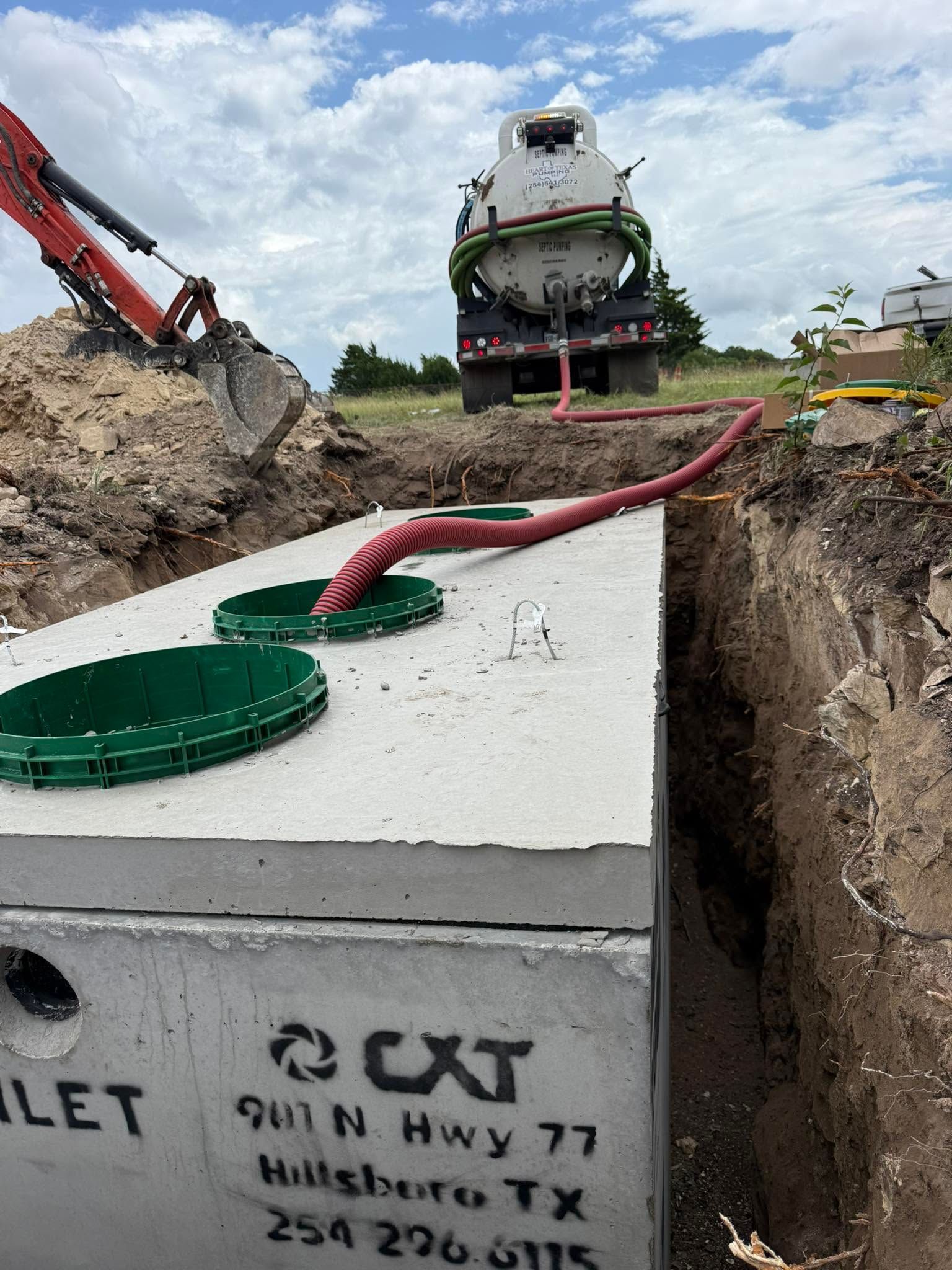
Older homes on septic systems with drain fields are the main reason regular pumping matters in Belton, Salado and Troy, where many properties rely on gravity-fed systems installed in the 1970s and 1980s. A septic tank separates solids from wastewater, allowing only clarified liquid to exit into the drain field, but the sludge layer at the bottom and the scum layer at the top accumulate over time and reduce the tank's effective capacity. When the sludge rises to the level of the outlet baffle, solids begin entering the drain field, clogging the soil and causing the field to fail. Heart of Texas Pumping LLC pumps septic tanks in Belton, Moody, Temple, Salado and nearby towns, with 24/7 service and free estimates by phone, removing sludge and scum before they compromise the drain field.
Free estimates are offered by phone, and the owner goes out on-site when a visit is needed to assess the tank location or condition. The crew pumps the tank completely, removing sludge, scum and liquid so the tank is restored to its full capacity and the separation process can resume. While the tank is open, the crew reports on the baffle condition, the sludge and scum depth, and the liquid level, and they recommend when the tank should next be pumped based on household size and usage patterns. Most tanks in Central Texas require pumping every three to five years, but larger households or tanks that were undersized for the property may need more frequent service.
Request a free phone estimate and schedule pumping before sludge reaches the outlet level.
Why Regular Pumping Protects the Drain Field
The drain field is the most expensive component of a septic system to replace, and it cannot be repaired once the soil is clogged with solids. Pumping the tank on schedule prevents solids from exiting the tank, keeping the drain field clear and functional. The crew measures the sludge and scum layers during each visit, and when the combined depth reaches one-third of the tank's liquid capacity, pumping is necessary. This threshold ensures that the outlet baffle remains clear and that only clarified liquid enters the field.
After pumping, the tank drains properly, toilets flush without backing up, and the drain field continues to absorb effluent without surfacing or saturating. The sludge and scum layers are removed, and the tank is emptied so the bacterial action that breaks down solids can resume at full efficiency. The crew leaves the access covers secured and the site clean, and the tank is ready for another cycle of use.
Pumping does not repair a tank that is cracked, a baffle that is broken, or a drain field that has already failed. The crew notes any damage observed during the visit and explains whether repair is needed, but the primary purpose of pumping is preventive: to remove accumulated solids before they cause a problem rather than to fix a system that has already stopped working.

Questions Homeowners Ask Before Pumping
Septic pumping is scheduled by phone, and the crew explains what was found and when the next service should occur. These questions address how pumping works and what homeowners should know.
How do you know when a septic tank needs pumping in Holland or Killeen?
The tank should be pumped when the sludge and scum layers combined occupy one-third of the tank's liquid depth, which typically occurs every three to five years depending on household size and water usage. Signs that pumping is overdue include slow drains, sewage odor near the tank, or effluent surfacing in the drain field.
What does the crew check while the tank is open during pumping?
The crew measures the sludge and scum depth, inspects the inlet and outlet baffles for cracks or detachment, and checks the liquid level to confirm the outlet is draining. These observations determine whether the tank is functioning properly or whether repair is needed.
Why do some tanks in older rural homes fill faster than expected?
Undersized tanks, high water usage, or a damaged drain field that is backing liquid into the tank can all cause faster fill rates. The crew evaluates the tank size relative to the household and the condition of the baffles and outlet, and they explain whether the system is operating normally or whether a problem is present.
What should you do to prepare for septic pumping?
Locate the tank covers if you know where they are, and provide access to the area so the truck can park within hose reach. The crew handles uncovering and pumping, and you do not need to be present during the service unless you want the crew to explain the findings on-site.
What happens to the sludge and wastewater after the tank is pumped?
The crew hauls the waste to a licensed treatment or disposal facility, where it is processed according to state regulations. The tank is pumped completely, leaving it empty and ready for the next cycle of use.
Heart of Texas Pumping LLC is locally owned and raised, with nearly 85 Google reviews and owner replies, and 24/7 availability for emergency service. The business also performs septic pumping in Temple, Waco and Killeen, and free phone estimates are available to homeowners throughout Central Texas.